Why Jaw Pain Can Feel Like Ear Pain, Tooth Pain, Headache, or Neck Pain
- Lorraine Carroll MPhty, BSc Physio, CMA

- 3 days ago
- 5 min read

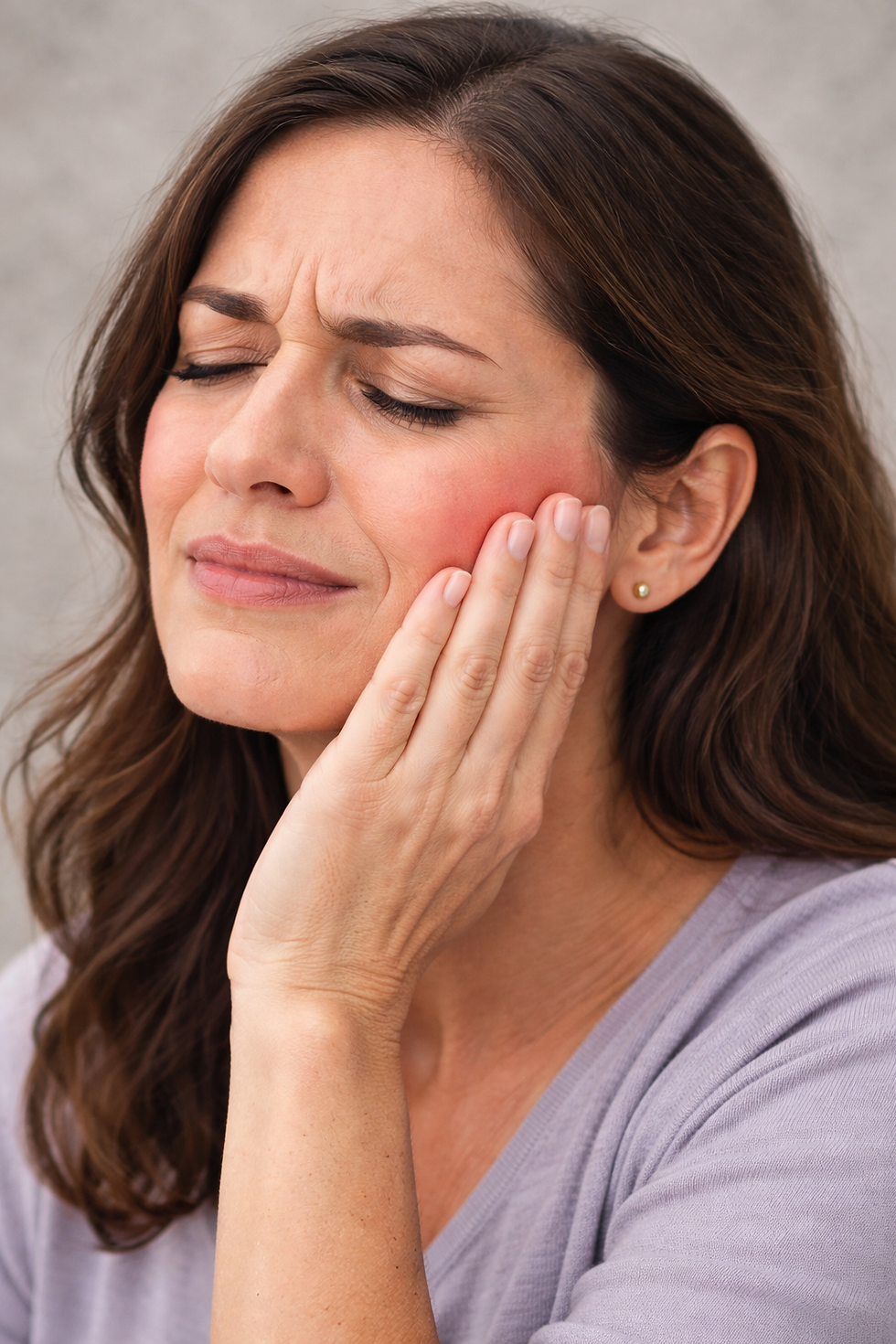
Many people with temporomandibular disorder, often called TMD, notice symptoms in places that seem separate from the jaw joint. You might feel aching in or around the ear, pressure or fullness in the ear, temple pain, headaches, facial aching, tooth pain, neck stiffness, or pain at the base of the skull.
This can be confusing, especially when ear checks, dental checks, scans, or hearing tests come back normal. It may leave you wondering, “If nothing is showing up, why does it still hurt?”
The good news is that this pattern is common in TMD. It often relates to how the jaw, face, head, ear region, and upper neck share closely connected nerve pathways.
The jaw, ear, head, and neck are closely connected
The jaw joint sits just in front of the ear. The chewing muscles, jaw joint, teeth, face, temples, and parts of the head all send sensory information to the brain through the trigeminal nerve.
The upper neck also sends pain signals into a closely connected area of the nervous system known as the trigeminocervical complex. This acts a little like a shared processing centre for pain from the jaw, face, head, and upper neck.
Because these signals overlap, the brain may not always identify the exact source of the problem. This is one reason jaw-related pain can be felt as:
ear pain or aching
ear pressure or fullness
temple pain
headache
facial aching
pain in the teeth
pain behind or around the eye
neck pain
pain at the base of the skull
The pain is real. It is not imagined. But the structure causing the pain may not be the ear, tooth, or head area where the pain is being felt.
Why ear symptoms are common with TMD
Ear symptoms are one of the most common reasons people with TMD become concerned.
People may describe:
aching inside the ear
a blocked ear sensation
fullness or pressure
mild tinnitus
pain that worsens with chewing
pain that worsens after clenching
symptoms that fluctuate with jaw tension or stress
In many cases, an ear, nose, and throat (ENT) examination is normal. There may be no infection, no fluid behind the eardrum, and no clear ear disease.
This does not mean nothing is wrong. It may mean the ear region is receiving referred pain from nearby jaw structures, chewing muscles, or sensitised nerve pathways.
TMD-related ear symptoms are often more likely when the discomfort changes with chewing, clenching, yawning, jaw movement, or pressure over the jaw muscles. Research has also found an association between otologic symptoms, such as ear pain or fullness, and TMD, although the evidence for treatment effects is still developing and should be interpreted carefully.
Why headaches and neck pain often occur with TMD
The jaw and neck do not work in isolation.
When the jaw is tense, the upper neck often becomes tense too. When the upper neck is stiff, painful, or sensitised, jaw symptoms can also become more noticeable.
People with TMD commonly present with a combination of:
tight masseter and temporalis muscles (chewing muscles)
upper neck stiffness
tenderness under the base of the skull
reduced jaw opening
jaw clicking or deviation
headaches around the temples, forehead, or side of the head
increased symptoms after clenching or prolonged talking
This overlap makes sense when we consider the shared nerve processing between the jaw and upper cervical spine (neck). Systematic review evidence has found clinically relevant associations between TMD, jaw disability, and cervical spine features, supporting the need to assess both the jaw and neck rather than looking at one area alone.
Clenching can keep the system irritated
Clenching and grinding can repeatedly load the jaw muscles and joints.
Over time, this may make the pain system more sensitive. The threshold for pain can become lower, symptoms may spread, and activities such as chewing, talking, yawning, or touching the jaw muscles may change from feeling normal or a bit uncomfortable to painful.
Stress can add another layer. When we are under pressure, the jaw often becomes part of the body’s protective response. The teeth may touch more often, the tongue may press, the shoulders may lift, breathing may become shallower, and the neck and jaw muscles may stay switched on for longer than they need to.
This does not mean stress is “all in your head.” It means the nervous system, muscles, joints, breathing patterns, and daily habits can all influence each other.
What physiotherapy can help with
TMD physiotherapy is not just about loosening the jaw.
A good assessment looks at the whole jaw–neck–head system. This may include the jaw joints, chewing muscles, upper neck, posture, movement habits, clenching patterns, breathing, and symptom behaviour.
At DentalPhysio in Buderim, we bring many years of hands-on physiotherapy experience to this type of integrated assessment. For people with jaw pain, ear-region discomfort, headaches, or neck stiffness, treatment may include:
jaw joint and muscle assessment
upper cervical spine assessment
gentle manual therapy
medical acupuncture or dry needling techniques, where appropriate
jaw relaxation strategies
controlled jaw opening exercises
posture and head-neck control
education about clenching and pain sensitivity
simple home exercises
practical advice for chewing, yawning, talking, and resting the jaw
The aim is to reduce pain sensitivity, improve jaw and neck function, and help you feel more confident managing your symptoms.
When to seek assessment
Consider a TMD assessment if you have ongoing ear pain, headache, jaw pain, or neck pain that is associated with:
jaw clicking
jaw stiffness
clenching or grinding
pain with chewing
reduced mouth opening
morning jaw tightness
normal ear investigations
symptoms that fluctuate with stress or jaw tension
Typical TMD features can include jaw pain, restricted jaw movement, and jaw joint sounds, but each person’s presentation needs to be assessed individually.
The key message
Jaw pain can feel like ear pain, headache, facial pain, or neck pain because these regions share closely connected pain pathways.
When the jaw system becomes irritated or sensitised, symptoms can spread beyond the temporomandibular joint itself. This is why effective TMD care often needs to consider the jaw, neck, muscles, habits, stress response, and nervous system sensitivity together.
If you are on the Sunshine Coast and have been dealing with jaw pain, ear-region discomfort, headaches, or neck stiffness, DentalPhysio can help you understand what may be contributing to your symptoms and what can be done about it.
By Lorraine Carroll
References
Bizzarri, P., Scafoglieri, A., & colleagues. (2025). Temporomandibular disorders and orofacial outcomes in subjects with neck pain or cervicogenic headache: A systematic review and meta-analysis. Journal of Clinical Medicine. https://doi.org/10.3390/jcm15010266
Cuenca-Martínez, F., Herranz-Gómez, A., Madroñero-Miguel, B., Reina-Varona, Á., La Touche, R., Angulo-Díaz-Parreño, S., & López-de-Uralde-Villanueva, I. (2020). Craniocervical and cervical spine features of patients with temporomandibular disorders: A systematic review and meta-analysis of observational studies. Journal of Clinical Medicine, 9(9), 2806.
Keith, D. A., Kulich, R. J., Bharel, M., Chuang, S. K., & Dodson, T. B. (2022). Is there an association between otologic symptoms and temporomandibular disorders? The Journal of the American Dental Association, 153(11), 1097–1107.
Maini, K., & Dua, A. (2025). Temporomandibular syndrome. In StatPearls. StatPearls Publishing.


Comments