The surprising link between hormones and TMJ disorder
- Lorraine Carroll MPhty, BSc Physio, CMA

- Mar 3
- 4 min read
You’re chewing a sandwich or yawning at the end of a long day… and click—your jaw makes that unmistakable sound. Sometimes it’s painless. Other times it comes with aching near the ear, headaches, facial tension, or the unnerving feeling your jaw might lock.
A clicking jaw can absolutely be influenced by your bite, clenching, dental work, or injury —but there’s another piece many people never hear about: hormones and the connective tissue inside the jaw joint (TMJ).
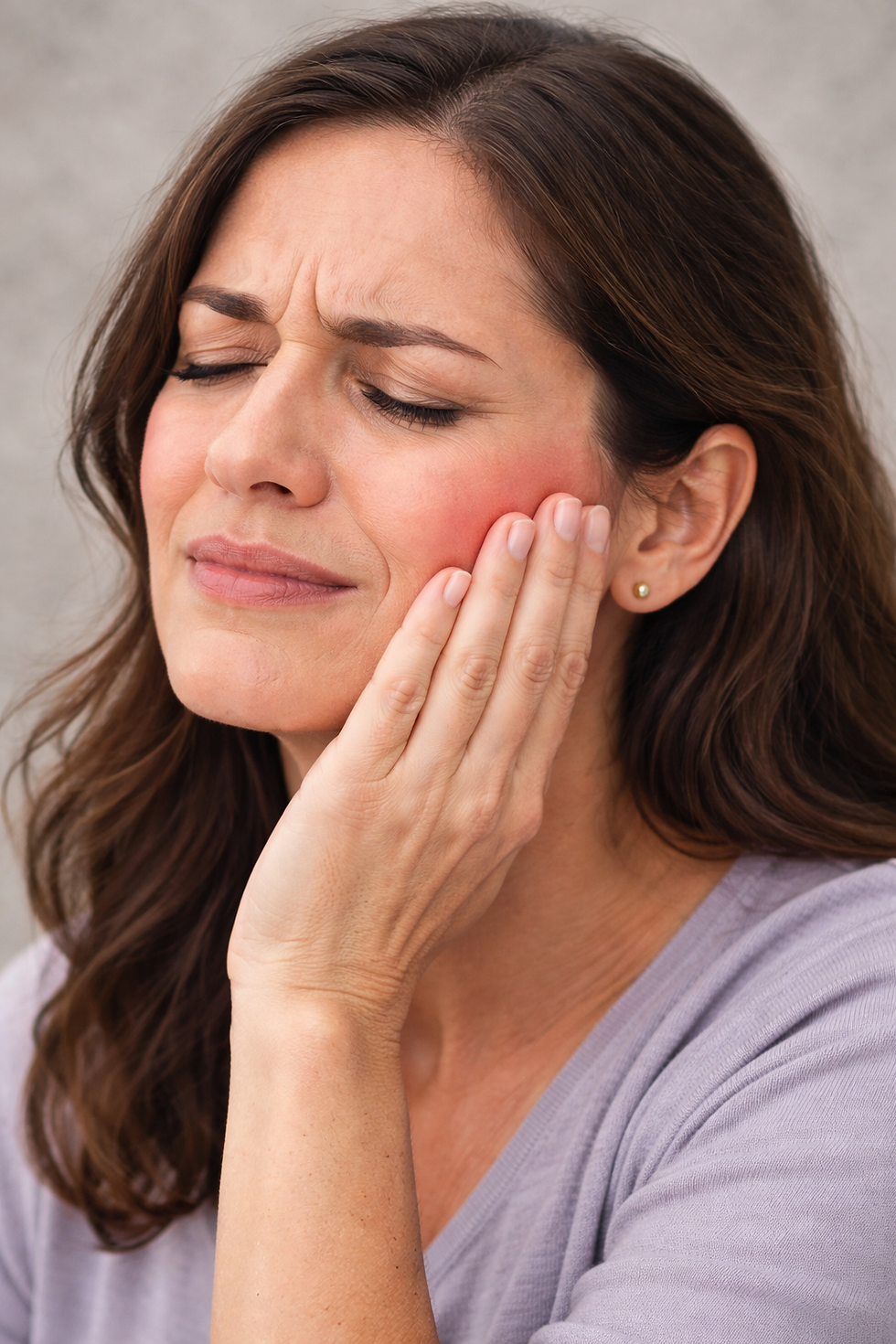
Why TMJ problems are more common in women
Temporomandibular disorders (TMD) are reported more often in women than men, and research consistently shows a clear sex difference in both prevalence and incidence of TMD-related pain (Häggman-Henrikson et al., 2020). Clinically, many women also notice symptom “waves” that seem to line up with hormonally dynamic times—puberty, pregnancy, postpartum, and perimenopause/menopause—even when their teeth and bite haven’t changed.
The connective tissue connection
Your TMJ isn’t just a simple hinge. It’s a complex joint that includes:
A small cartilage disc (like a cushion)
Ligaments that help hold that disc in position
Muscles that guide smooth opening, closing, and side-to-side movement
Here’s where hormones matter. TMJ tissues are biologically active and influenced by endocrine signals, and researchers have explored how female hormones may affect pain sensitivity, inflammation, and joint tissue behaviour (Häggman-Henrikson et al., 2020). In addition, relaxin is known for increasing ligament laxity, and research has examined TMD symptoms in pregnancy—one of the most hormonally and ligamentously dynamic periods of life (Solak & co-authors, 2009).
How “looseness” can lead to clicking (and locking)
A common reason for clicking is that the cartilage disc isn’t gliding perfectly with the jaw bone. When the disc momentarily slips and then “recaptures,” you can hear or feel a click or pop.
If the disc doesn’t recapture well, symptoms can escalate to:
Pain with chewing
Limited opening or deviation to one side
Locking closed (disc not moving out of the way)
Occasionally a sense of instability (especially if the joint is very mobile)
Hormones don’t “cause” every click—but they can be a meaningful contributor in some people, especially when combined with clenching, stress, hypermobility, poor sleep, or a history of jaw overload (Häggman-Henrikson et al., 2020).
A quick note on hormonal conditions
Some hormonal conditions may also be associated with higher rates of TMD. For example, researchers have explored whether people with polycystic ovary syndrome (PCOS) experience TMD more frequently (Soydan et al., 2014). This doesn’t mean PCOS “causes” TMJ pain, but it does support the broader point: your jaw joint doesn’t exist in isolation from your biology.
Management over “quick fixes”
Because hormones naturally fluctuate across life, the goal is usually not a “one-off cure.” Instead, it’s about calming the joint and restoring controlled, confident movement—so you can eat, talk, yawn, and sleep without guarding.
In clinical practice, the most helpful approach is often team-based:
A TMJ-aware dentist (for bite/splint guidance when appropriate)
A specialised physiotherapist (for joint mechanics, muscle tone, neck contribution, and habit retraining)
What you can do right now (simple, practical steps)
If your jaw is clicking—especially with pain—these are good first steps:
Avoid extremes for 2–3 weeks. Skip very chewy foods, wide yawns, gum, and hard crusts. Think “jaw-friendly diet.”
Gentle, controlled movement beats stretching hard. Big stretches can aggravate a sensitive joint. Better: small, smooth opening with the tongue resting on the roof of the mouth.
Check your daytime jaw habits. Aim for: lips together, teeth apart, tongue resting up. Clenching is a major “multiplier” for symptoms (Häggman-Henrikson et al., 2020).
Support sleep and stress load. A stressed nervous system often equals a more guarded jaw and higher muscle tone.
Get assessed early if you have locking, worsening pain, or headaches. Clicking without pain can be monitored, but locking and escalating symptoms need a proper assessment.
How we help at DentalPhysio
At DentalPhysio with Lorraine Carroll & Simon Coghlan, we look beyond “just the jaw.” TMJ symptoms often involve the neck, upper back, breathing patterns, facial muscles, and nervous system sensitivity—and we assess how these pieces interact for you.
Your plan may include:
Hands-on treatment for jaw and neck mobility
Muscle and joint retraining (so the joint moves smoothly, not forcefully)
Education around clenching, chewing load, and sleep positioning
Coordination with your dentist if splint support or imaging is indicated
Ready to get on top of your clicking jaw?
If your jaw is clicking, sore, or occasionally locking, you don’t have to “just live with it.” The earlier you address the drivers (including hormonal vulnerability + muscle load), the more straightforward it usually is to settle.
Call: 07 3532 8605
Visit: Suite 2, 24–26 Gloucester Road, Buderim,4556
Website: www.lcscphysiotherapy.com.au
By Lorraine Carroll
References:
Häggman-Henrikson, B., Liv, P., Ilgunas, A., & Visscher, C. M. (2020). Increasing gender differences in the prevalence and incidence of orofacial pain related to temporomandibular disorders. Pain, 161(8), 1900–1909.
Soydan, S. S., Uçkan, S., & Yildirim, D. (2014). Is the incidence of temporomandibular disorder increased in polycystic ovary syndrome? Oral Surgery, Oral Medicine, Oral Pathology and Oral Radiology, 118(6), 647–653.
Solak, Ö., & co-authors. (2009). Prevalence of temporomandibular disorders in pregnancy. European Journal of General Medicine.


Comments