Botox for Jaw Tension: What Patients Need to Know Before Treatment
- Simon Coghlan MSc, BSc Physio, DipMedAc

- Mar 28
- 6 min read
Updated: 3 days ago
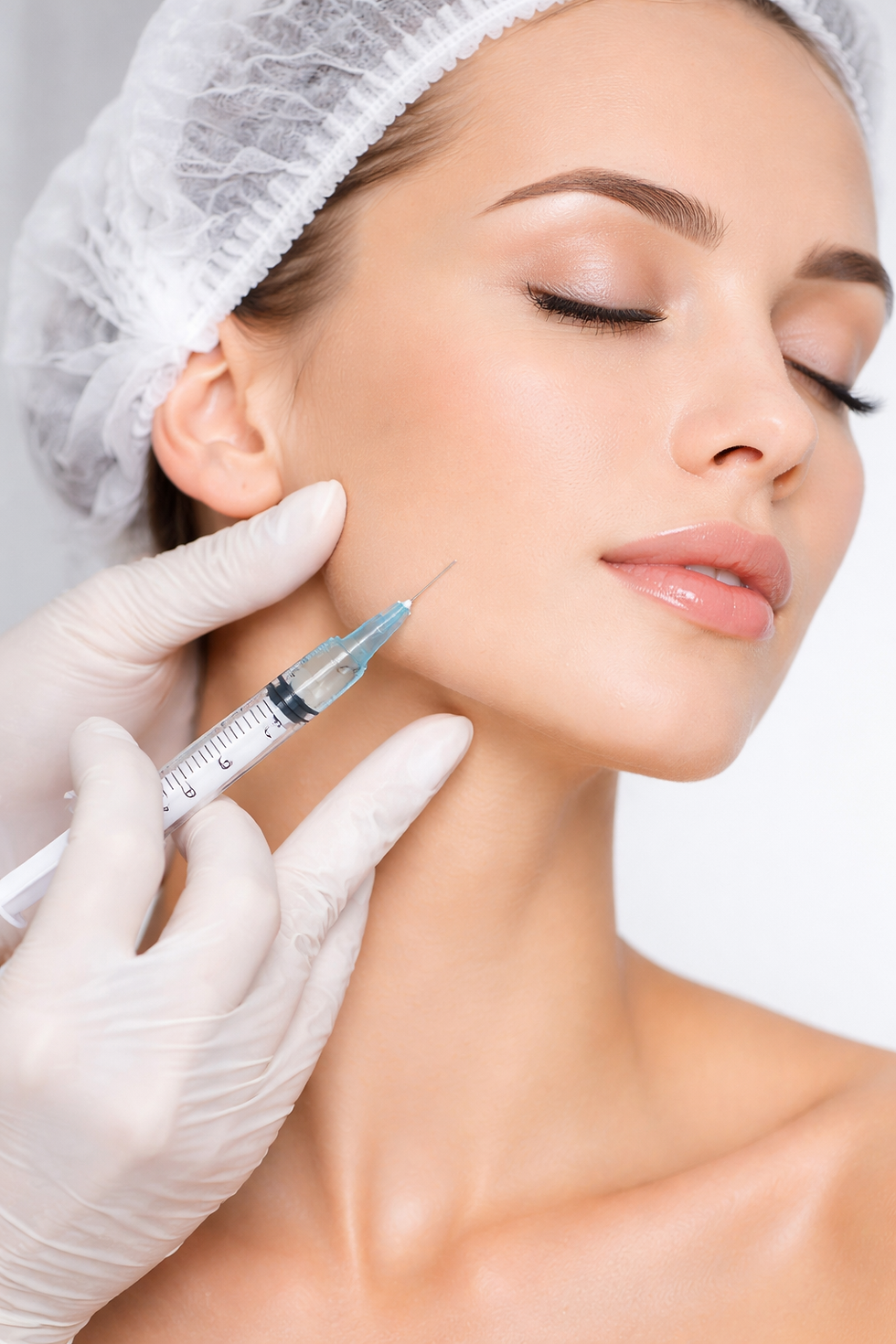
I want to be clear from the beginning. I am not against Botox injections in clinical practice. In the right setting, for the right person, Botox may have a very useful role. This is especially true when treatment is provided by a medically trained professional, such as a maxillofacial specialist or an appropriately trained dentist, and when it is planned carefully.
My caution is clinical. Botox is not always a quick fix. It is not right for every jaw problem. It should be planned carefully with a qualified provider so that it is given safely, accurately, and for the right reason.
Patients should also understand what it may help, what it may not help, and what the possible downsides are.
This research-based blog explains why I remain careful about recommending Botox for temporomandibular disorders, while still accepting that it may help in selected cases.
Why people use Botox for TMD
Botox is sometimes used when the main problem appears to be overactive or painful jaw muscles. This is most relevant in myogenous TMD. Myogenous simply means that the pain is thought to come mainly from the jaw muscles, rather than mainly from the jaw joint itself.
The term myofascial pain is also often used. If someone has sore, tight, overworking chewing muscles, Botox may be considered because it weakens those muscles and may reduce pain or heavy clenching.
That is the attraction of Botox. If the muscles are driving the problem, weakening or inhibiting them may seem like a logical answer.
Some earlier reviews and trials have reported benefit in selected patients, but the evidence is mixed. Delcanho et al. (2022) described the evidence for Botox in myogenous TMD as equivocal, meaning uncertain and inconsistent. A 2024 randomised placebo-controlled crossover trial found that 50 units of botulinum toxin type A might improve myofascial pain symptoms, but the authors also stated that the specific effect compared with placebo was not obvious (Sitnikova et al., 2024).
That is not a strong green light. It is more of a yellow light.
What the bigger picture says
The wider evidence has become more cautious.
The 2023 BMJ clinical practice guideline for chronic painful TMD, meaning pain present for three months or more, made a conditional recommendation against botulinum toxin injection (Busse et al., 2023). This means Botox should generally not be routine treatment for most people with long-standing painful TMD, except in certain situations.
It does not mean Botox should never be used. It means the evidence is not strong enough to support it as a standard go-to option for most patients.
Saini et al. (2024) found that Botox was not associated with better outcomes for pain reduction, adverse events, maximum mouth opening, bruxism events, or maximum occlusal force when compared mainly with placebo injections, and in some studies with active treatments such as manipulation (manual therapy) or other conventional care. That matters because these are the very outcomes often used to justify Botox treatment in TMD.
The current high-level message is this. Botox may help some people, but the best recent summary of the evidence does not show that it clearly performs better than placebo or other treatments on the outcomes that matter most.
What worries me most is what it may do to the muscles
This is where my caution becomes stronger.
A 2024 systematic review in Annals of Anatomy looked at the histological and functional effects of botulinum toxin type A in the chewing muscles. Histological means what happens to the tissue itself under the microscope. Functional means what happens to how the muscles actually work.
Guignardat et al. (2024) concluded that botulinum toxin injection into the masticatory muscles altered their histological structure and functional properties.
They found that even one injection was linked with:
Ultrastructural change, meaning microscopic changes inside the muscle fibres
Atrophy, meaning the muscle becomes smaller or thinner
Fibre type modification, meaning the muscle may change the type of fibres it relies on
Reduced bite force
Reduced muscle activity
The same review also stated that recovery was uncertain (Guignardat et al., 2024). This means we cannot confidently assume the muscle always returns to normal after the drug effect wears off.
The authors also gave an important warning. Multiple injections should be avoided (Guignardat et al., 2024).
This point is often skipped in casual discussions. Botox is not just a pain treatment. It is also a muscle-weakening treatment. If a patient may feel less pain for a while, but the price is muscle thinning, weaker biting, and uncertain recovery, that trade-off needs to be explained honestly.
What about the jaw bones?
There is also a bone question.
The 2024 muscle review noted that paralysis of the masticatory muscles can change mechanical stress on bone (Guignardat et al., 2024). If jaw muscles are weakened, the forces placed on the facial skeleton may change. That matters because bone health is influenced by loading.
This does not mean major bone damage happens in every patient. The bone evidence is less clear than the muscle evidence.
A separate 2024 systematic review looking at mandibular bone resorption and density found no clear pattern linking Botox injections in the chewing muscles to bone resorption. Most included studies did not show major consistent changes in jawbone measures (Wojtovicz et al., 2024).
So the fairest summary is this. The evidence for muscle change is stronger than the evidence for bone change, but bone loading still deserves attention.
Why I stay cautious
My hesitation about Botox for TMD comes down to a few practical points.
First, TMD is usually not one single problem. Some people mainly have muscle pain. Some mainly have joint pain. Some have disc problems, arthritis, headache overlap, poor sleep, stress-related clenching, or a mix of several factors. Clinically, I have found that those patients who are very sensitised, due to changes in how the brain processes pain signals (nociplastic pain), are much less likely to respond well to Botox, and may even get worse.
A treatment that inhibits muscle may help some muscle-driven cases. It will not fix every type of TMD.
Second, the best current guideline does not support routine Botox use for chronic painful TMD (Busse et al., 2023). Instead, the guideline gives stronger support to conservative and rehabilitative care, including cognitive behavioural therapy, therapist-assisted mobilisation, manual trigger point therapy, supervised postural exercise, supervised jaw exercise, stretching, education, reassurance, and usual care. It also gives conditional support to some other options, including acupuncture and combined manual therapy and exercise approaches (Busse et al., 2023). These are the kinds of treatments we commonly use in clinic.
Third, the best recent meta-analysis found that Botox was not associated with better results for the main TMD measures commonly studied (Saini et al., 2024).
Fourth, the newer tissue-level evidence raises a real concern that the chewing muscles themselves may change in meaningful ways, and full recovery cannot simply be assumed (Guignardat et al., 2024).
Fifth, patients are sometimes given the impression that Botox is a fast and easy answer. I think that is risky. It may be useful in some cases, but it should not be sold as a magic shortcut.
A balanced view
This does not rule out Botox’s usefulness.
Botox may still be considered in selected difficult cases. This is more likely when the pain seems clearly muscle-driven, when comprehensive conservative care has already been tried, and when the patient fully understands the possible benefits, limits, and risks.
That is very different from presenting Botox as a routine answer for clenching, bruxism, or chronic jaw pain.
My position is balanced but careful.
I am not anti-Botox. I believe it has a role. But I think patients should know that:
It is not always a quick fix
It is not right for every TMD
The best recent evidence does not strongly support routine use
The muscle effects deserve serious attention
Treatment should be planned carefully with an appropriately trained provider
Final thought
The real question is not whether Botox is good or bad.
The real question is whether it is being recommended with enough care, enough diagnostic accuracy, and enough honesty about what the evidence actually says.
For some patients, Botox may be reasonable.
But it is not simple. It is not risk-free. That is why I remain cautious.
By Simon Coghlan
References
Busse, J. W., et al. (2023). Management of chronic pain associated with temporomandibular disorders: A clinical practice guideline. BMJ, 383, e076227. https://doi.org/10.1136/bmj-2023-076227
Delcanho, R., et al. (2022). Botulinum toxin for treating temporomandibular disorders: What is the evidence? Journal of Oral & Facial Pain and Headache, 36(1), 6-20. https://doi.org/10.11607/ofph.3023
Guignardat, J.-F., et al. (2024). Systematic review of the histological and functional effects of botulinum toxin A on masticatory muscles: Consideration in dentofacial orthopedics and orthognathic surgery. Annals of Anatomy, 256, 152302. https://doi.org/10.1016/j.aanat.2024.152302
Saini, R. S., et al. (2024). The effectiveness of botulinum toxin for temporomandibular disorders: A systematic review and meta-analysis. PLOS ONE, 19(3), e0300157. https://doi.org/10.1371/journal.pone.0300157
Sitnikova, V., et al. (2024). Clinical benefit of botulinum toxin for treatment of persistent TMD-related myofascial pain: A randomized, placebo-controlled, cross-over trial. Pain Practice, 24(8), 1014-1023. https://doi.org/10.1111/papr.13396
Wojtovicz, E. L., et al. (2024). Botulinum toxin type A injection into the masticatory muscles and its effects on mandibular bone resorption and density: A systematic review. Clinical Oral Investigations, 28, 477. https://doi.org/10.1007/s00784-024-05838-5


Comments